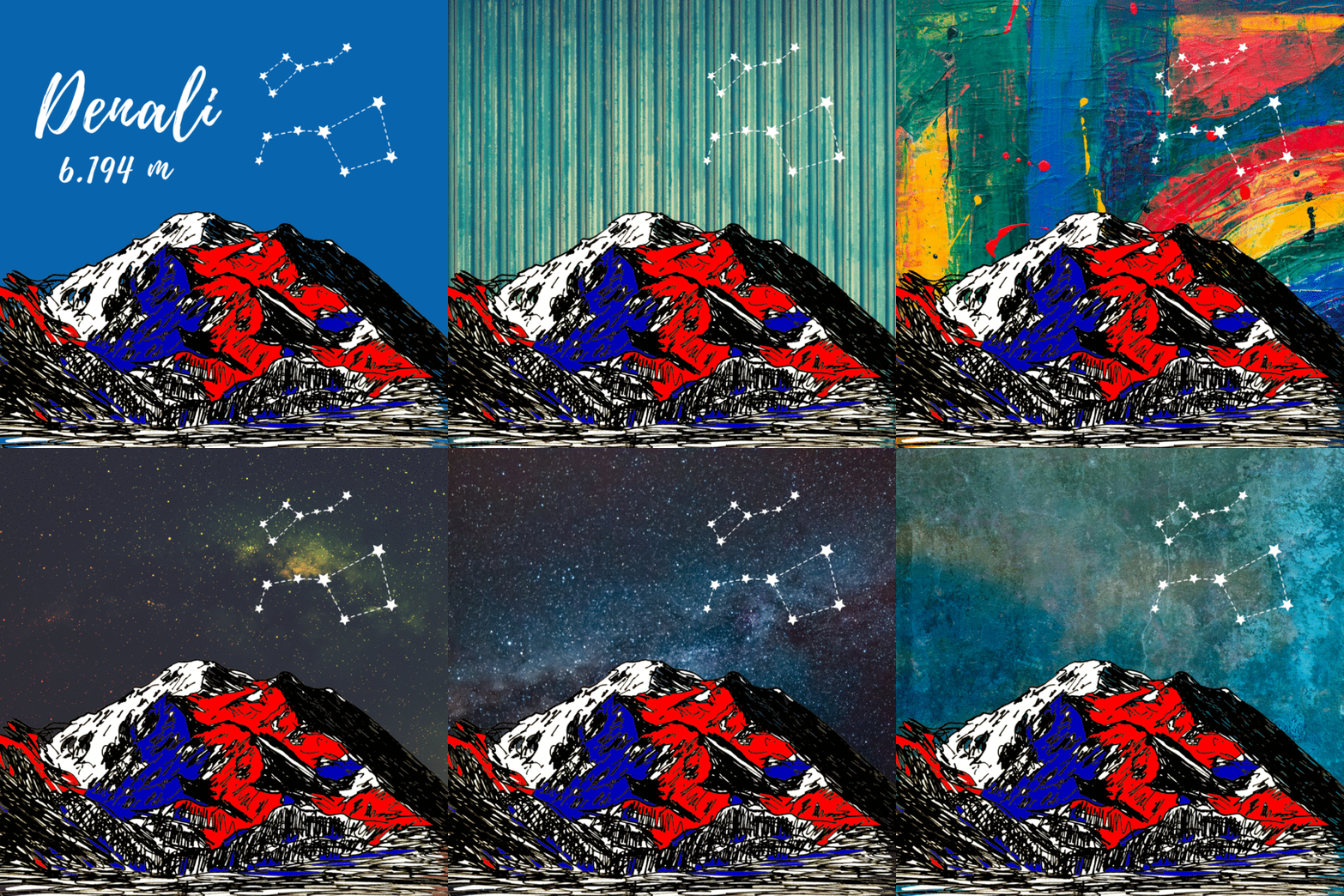
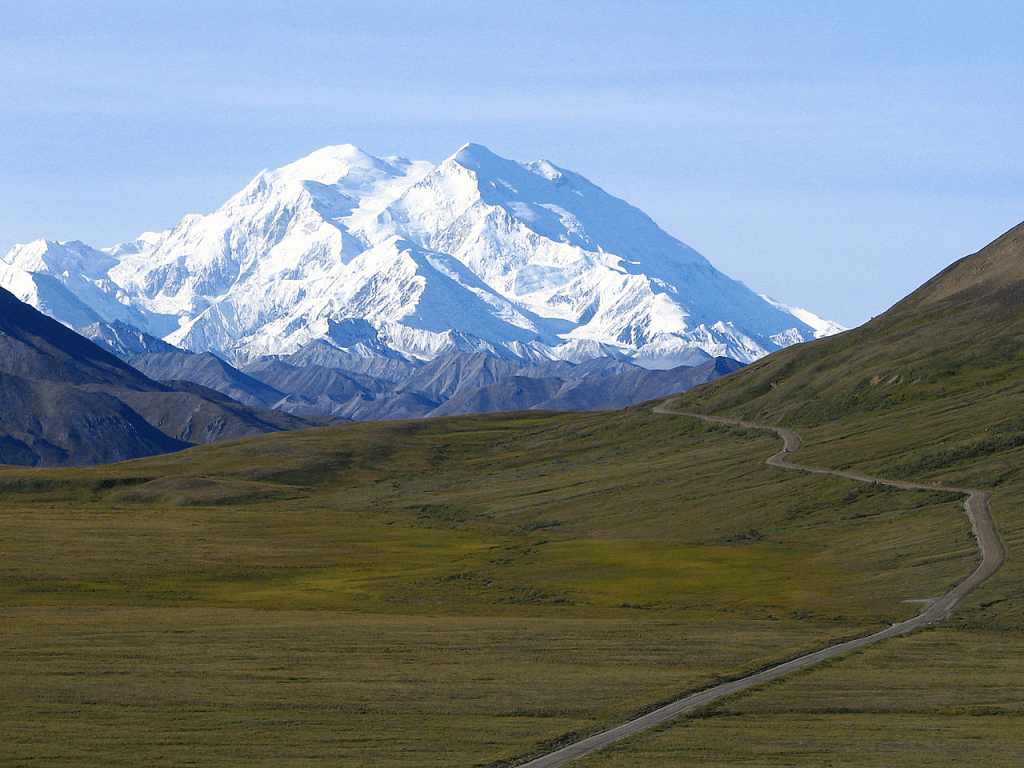
Denali (also known as Mount McKinley, its former official name) is the highest mountain peak in North America, with a summit elevation of 6,190 m above sea level. With a topographic prominence of 6,155 m and a topographic isolation of 7,436.9 km,Denali is the third most prominent and third most isolated peak on Earth, after Mount Everest and Aconcagua. Located in the Alaska Range in the interior of the U.S. state of Alaska, Denali is the centerpiece of Denali National Park and Preserve.
The Koyukon people who inhabit the area around the mountain have referred to the peak as “Denali” for centuries. In 1896, a gold prospector named it “Mount McKinley” in support of then-presidential candidate William McKinley; that name was the official name recognized by the federal government of the United States from 1917 until 2015. In August 2015, 40 years after Alaska had done so, the United States Department of the Interior announced the change of the official name of the mountain to Denali.
Denali
In 1903, James Wickersham recorded the first attempt at climbing Denali, which was unsuccessful. In 1906, Frederick Cook claimed the first ascent, but this ascent is unverified and its legitimacy questioned. The first verifiable ascent to Denali’s summit was achieved on June 7, 1913, by climbers Hudson Stuck, Harry Karstens, Walter Harper, and Robert Tatum, who went by the South Summit. In 1951, Bradford Washburn pioneered the West Buttress route, considered to be the safest and easiest route, and therefore the most popular currently in use.
Mount Kilimanjaro is a dormant volcano in Tanzania. It has three volcanic cones: Kibo, Mawenzi, and Shira. It is the highest mountain in Africa and the highest single free-standing mountain above sea level (Mauna Kea measured from the sea floor is higher) in the world: 5,895 metres above sea level and about 4,900 metres above its plateau base. It is the highest volcano in Africa and the Eastern Hemisphere.
Kilimanjaro is the fourth most topographically prominent peak on Earth. It is part of Kilimanjaro National Park and is a major hiking and climbing destination. Because of its shrinking glaciers and ice fields, which are projected to disappear between 2025 and 2035, it has been the subject of many scientific studies.
in 1887, the German geology professor Hans Meyer reached the lower edge of the ice cap on Kibo, where he was forced to turn back because he lacked the equipment needed to progress across the ice. The following year, Meyer planned another attempt with Oscar Baumann, a cartographer, but the mission was aborted after the pair were held hostage and ransomed during the Abushiri Revolt. In the autumn of 1888, the American naturalist Dr. Abbott and the German explorer Otto Ehrenfried Ehlers approached the summit from the northwest. While Abbott turned back earlier, Ehlers at first claimed to have reached the summit rim, but after severe criticism of the claim, withdrew it.
In 1889, Meyer returned to Kilimanjaro with the Austrian mountaineer Ludwig Purtscheller for a third attempt. This attempt was based on the establishment of several campsites with food supplies so that multiple attempts at the top could be made without having to descend too far. Meyer and Purtscheller pushed to near the crater rim on 3 October but turned back exhausted from hacking footsteps in the icy slope. Three days later, they reached the highest summit, on the southern rim of the crater. They were the first to confirm that Kibo has a crater. After descending to the saddle between Kibo and Mawenzi, Meyer and Purtscheller attempted to climb the more technically challenging Mawenzi but could only reach the top of Klute Peak, a subsidiary peak, before retreating due to illness. On 18 October, they reascended Kibo to enter and study the crater, cresting the rim at Hans Meyers Notch. In total, Meyer and Purtscheller spent 16 days above 4,600 metres during their expedition. They were accompanied in their high camps by Mwini Amani of Pangani, who cooked and supplied the sites with water and firewood.
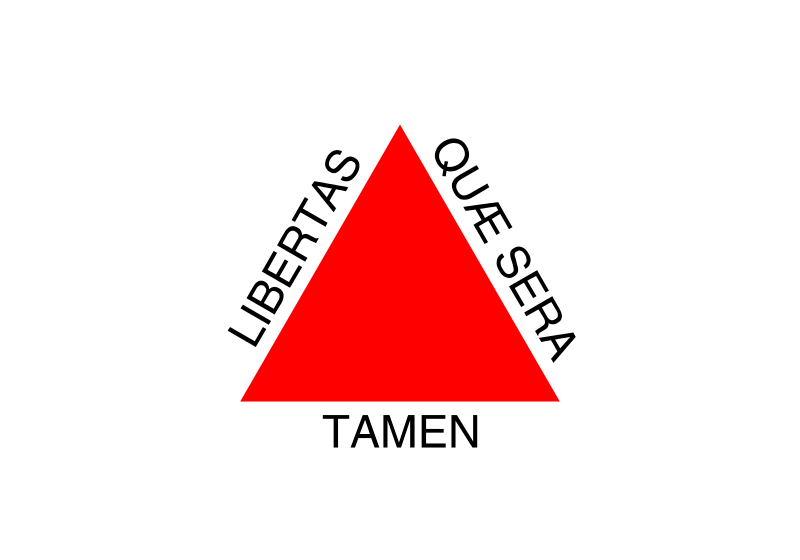
“Libertas quæ sera tamen”, means “Freedom albeit late”, and was the motto of the Inconfidência Mineira, which fought for Minas’ independence from Portugal in the 18th century.
As a good Minas Gerais-born, today, April 21st, we “celebrate” Inconfidência Mineira. But what was it and what does it have to do with Bitcoin and crypto?
Well, History time! Inconfidência Mineira (“Minas Gerais Conspiracy”) was an unsuccessful separatist movement in Brazil in 1789. It was the result of a confluence of external and internal causes in what was then a Portuguese colony. The external inspiration was the independence of thirteen of the British colonies in North America following the American Revolutionary War, a development that impressed the intellectual elite of particularly the captaincy of Minas Gerais. The main internal cause of the conspiracy was the decline of gold mining in that captaincy. As gold became less plentiful, the region’s gold miners faced increasing difficulties in fulfilling tax obligations to the crown (the tax over gold was one-fifth). When the captaincy could not satisfy the royal demand for gold, it was burdened with an additional tax on gold, called derrama. Conspirators seeking independence from Portugal planned to rise up in rebellion on the day that the derrama was instituted.
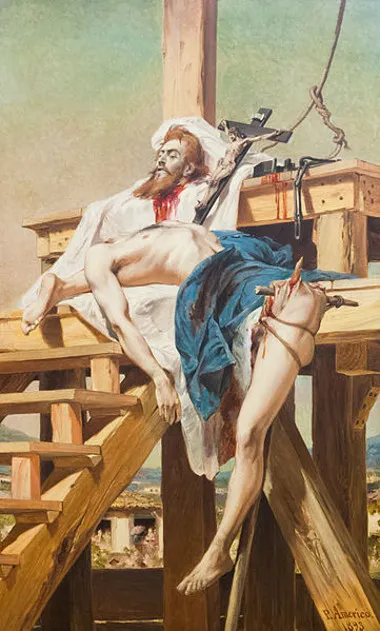
The conspiracy attracted a great number of military personnel, priests, and intellectuals, as well as the poets Cláudio Manuel da Costa and Tomás Antônio Gonzaga (1744–1807?). Among the best known participants were Joaquim José da Silva Xavier, best known as “Tiradentes”; José Álvares Maciel, philosopher and chemistry student; and Lieutenant Colonel Francisco de Paula Freire de Andrade (1756–1792) of the regiment of dragoons. Tiradentes, who came from Andrade’s regiment, was the independence movement’s most enthusiastic propagandist.
Eventually, three participants in the independence movement revealed the conspirators’ plans to the government, and the rebels were arrested in 1789. Judicial proceedings against the conspirators lasted from 1789 to 1792. Lieutenant Colonel Freire de Andrade, Tiradentes, José Álvares Maciel, and eight others were condemned to the gallows. Seven more were condemned to perpetual banishment in Africa, the rest were acquitted. Following the trial Queen Maria I commuted the sentences of capital punishment to perpetual banishment for all except those whose activities involved aggravated circumstances. That was the case for Tiradentes, who took full responsibility for the conspiracy movement and was imprisoned in Rio de Janeiro, where he was hanged on 21 April 1792. Afterwards, his body was torn into pieces, which were sent to Vila Rica in the captaincy of Minas Gerais, to be displayed in the places where he had propagated his revolutionary ideas. The anniversary of his death is celebrated as a national holiday in Brazil.
“Libertas quæ sera tamen”, means “Freedom albeit late”, and was the motto of the Inconfidência Mineira. It’s written in Minas Gerais Flag, and it applies to the economic revolution we’re living right now with the freedom it’s possible thanks to cryptography. Not gold anymore, Bitcoin, Ethereum, Cryptocurrencies. Money that don’t belong to authorities.
It’s a good time to think in new government designs, think, question, and build the best way of living for everybody with authonomy and freedom, but with logical social organization.
May we never forget.
Minas Gerais Flag
5 units of Libertas Quae Sera Tamen will be avaliable on OpenSea for 0.1 ETH from April 21st until April 28th! Then, the unsold itens will be burn!
Who also thought Mont Blanc was the highest peak in Europe?
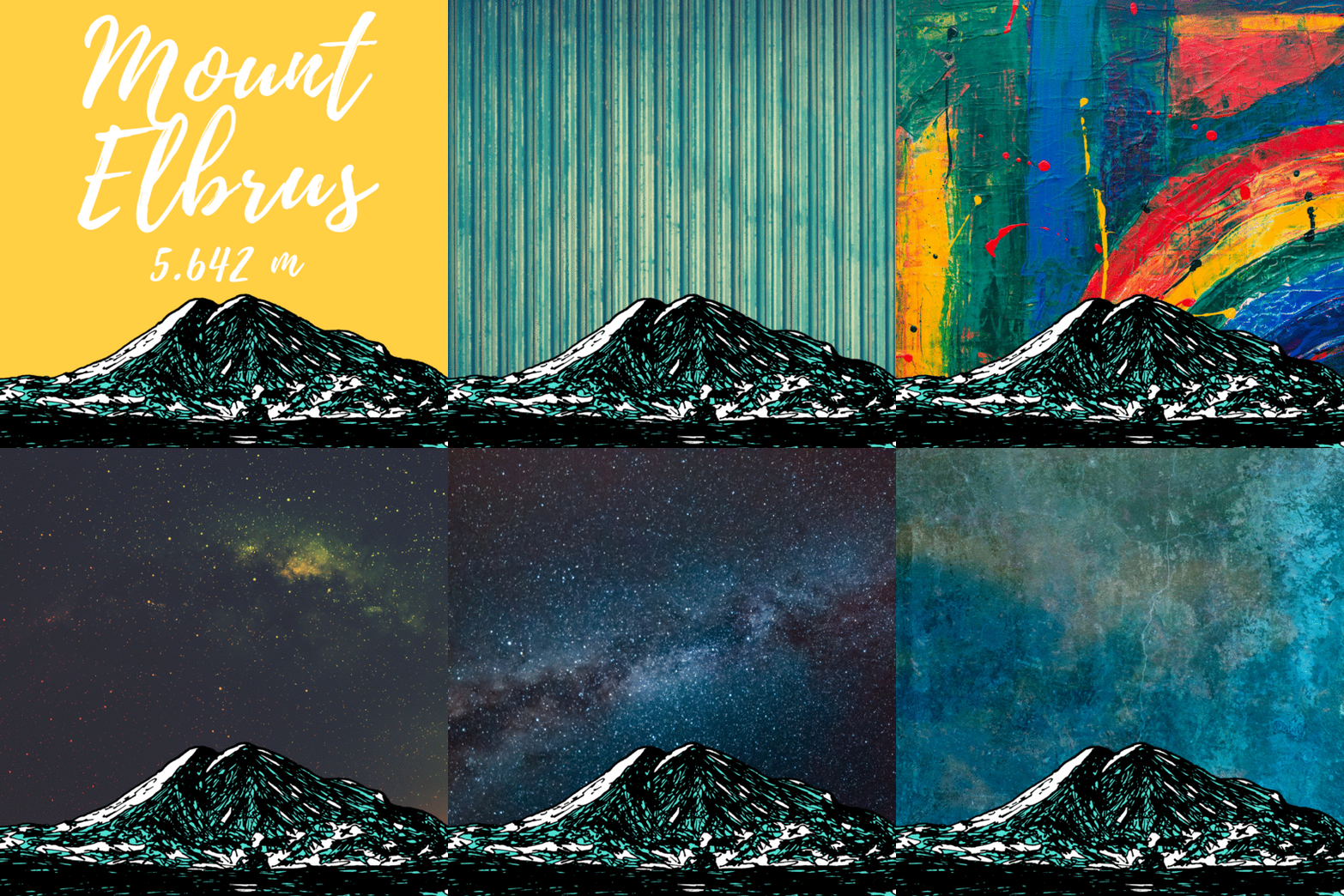
Mount Elbrus is the highest and most prominent peak in Russia and Europe. It is situated in the western part of the Caucasus and is the highest peak of the Caucasus Mountains. The dormant volcano rises 5,642 m above sea level; it is the highest stratovolcano in Eurasia, as well as the tenth-most prominent peak in the world. The mountain stands in Southern Russia, in the Russian republic of Kabardino-Balkaria.
Elbrus has two summits, both of which are dormant volcanic domes. The taller, western summit is 5,642 metres; the eastern summit is 5,621 metres. The eastern summit was first ascended on 10 July 1829 by Khillar Khachirov, and the western summit in 1874 by a British expedition led by F. Crauford Grove and including Frederick Gardner, Horace Walker and the Swiss guide Peter Knubel.
In 7 Summits collection, It’s gonna be avaliable 50 different Puncak Jaya NFT designs, some rarer than others, so be aware so you won’t lose the minting day to adquire the most beautiful ones!
Buying an NFT of 7 Summits collection, please, contact me, so I can send you a art gift straight to your house!
Mount Vinson is the highest peak in Antarctica, at 4,892 metres. It lies in the north part of Vinson Massif’s summit plateau in the south portion of the main ridge of the Sentinel Range about 2 kilometres north of Hollister Peak. It was first climbed in 1966 by an American team led by Nicholas Clinch. An expedition in 2001 was the first to climb via the Eastern route, and also took GPS measurements of the height of the peak. As of February 2010, 1,400 climbers have attempted to reach the top of Mount Vinson.
In 7 Summits collection, It’s gonna be avaliable 50 different Mount Vinson NFT designs, some rarer than others, so be aware so you won’t lose the minting day to adquire the most beautiful ones!
Buying an NFT of 7 Summits collection, please, contact me, so I can send you a art gift straight to your house!
One view from the top of Tijuca Peak (1021m), in Rio de Janeiro, Brasil
Since 2018 I go hiking and trekking. I was 24 when I started to adventure myself into the wild. But my first solo experiences were in 2015, when I solo backpacked for two months in 12 countries.
When I started hiking and trekking, I wanted to adventure myself, but I didn’t know how to do it… I was too imature, I had my questions about security, I had never done exposed myself to the wild… So I started hiking with hike groups!
It was a really important the way it was. The people I knew, The things I learnt. I was a lonely wolf, but I discovered the people who are with us at the same vibration make everything better, wherever we are! Spreading love around… But it doesn’t mean dependence! And that’s how I went to Tijuca Peak, solo… It’s really not a big deal. I think everybody could go solo there, it’s a controlled ambient. But it’s not about that. It’s about the feeling of life pulsing that calls to the adventure, no matter how. I was how it was. My friend was busy. So I went.
Controlled ambient, didn’t even bring an anorak or headlamp (things I always carry when I go for a hike). Just picked up 3 breads, cooked 2 eggs, water, my notebook and went. I think the greater adventure was to reach the place using public transport in Rio de Janeiro. The number of the bus had changed and the informations on the web weren’t updated. When I discovered wich was the right bus, the weather started to change… But I decided to go anyway.
Arriving there, there were no sinalizations about Tijuca Peak, only other information about Tijuca Forest. I askd some girls thar were in a group knowing some parts of the forest, and she didn’t know about Tijuca Peak. And she was chocked I was alone, for being a woman. If she didn’t tell me that I would even forget if I’m a woman, if I’m a man, or whatever I am! I’m just a person who wants to reach Tijuca’s Peak! So I kept walking.
Some kilometers later on the forest road, the security guards told me I was in the right way and I just needed to keep following. Ok. A few kilometers more later, I found the signals, and entered in Tijuca’s Peak trail.
It was a calm hike into the woods in Tijuca’s Forest. It was cloudy, and the cloud was down enough so I was inside it. I knew it was raining a little, or it was just the cloud wet, but the trees were somehow protecting from the small rain. No big deal. But it was peaceful… Decided to continue to the peak.
It was not a hard hike. Soon I was at the famous stairs at the stone, climbed it and could see absolutely nothing! Only around the summit and the signal with the peak high. I took a picture at the signal, and arrived to guys with ropes and climbing equipament! Climbers! I asked one of them to take a picture for me and we started talking!
The stairs
I discovered he is a friend’s friend, and he is mentioned in the end of a climbing book I was reading at this time, of the conquist of some famous peaks in Espírito Santo. We talked about climbing in Rio de Janeiro and how the excurcionists clubs work. This guy was guiding an argentinan guy, and we talked about Patagonia and Piedra Parada…
Well, they left and I stayed… Burnt a peace cigarrete and listened; the silence. The wind was moving the clouds, and in some moments I could see the “back” of Rio de Janeiro. I could’n see the South Zone this day because of the clouds. But it was amazing to understand where I was. Maracanã stadium, Fundão Island… The chaos down there… And the silence up here… The most noisy sound was when the wind was touching the tree’s leaves. And I recorded it… The tropical birds singing at the Atlantic Forest… Peace!!
This peace that I’m sharing with you in this NFT. This shitty picture is just to situate where It is! In it you can see Tijuca Mirim (917m) and Andaraí Maior (861m) and the back of Rio de Janeiro. But the sound… Put your earphones up and enjoy this experience!
What do you listen?
You can buy one of the 5 avaliable for 0.1ETH on OpenSea!
Ps.: Before the rain I ran and still could meet Tijuca Mirim and Andaraí Maior peaks before coming back! Adventure yourself!!
This is Puncak Jaya (literally “Glorious Peak”) or Carstensz Pyramid, Mount Jayawijaya or Mount Carstensz on the island of New Guinea, with an elevation of 4,884 m, is the highest mountain peak of an island on Earth, and 7th summit on the 7 Summits Messner’s list, on Australasia!
In 1936, the Dutch Carstensz Expedition, unable to establish definitively which of the three summits was the highest, attempted to climb each. Anton Colijn, Jean Jacques Dozy and Frits Wissel reached both the glacier-covered East Carstensz and Ngga Pulu summits on December 5, but, due to bad weather, failed in their attempts to climb the bare Carstensz Pyramid. Because of extensive snow melt, Ngga Pulu has become a 4,862 m subsidiary peak, but it has been estimated that in 1936 (when glaciers still covered 13 km2 of the mountain) Ngga Pulu was indeed the highest summit, reaching over 4,900 m.
The now-highest Carstensz Pyramid summit was not climbed until 1962, by an expedition led by the Austrian mountaineer Heinrich Harrer (of Seven Years in Tibet fame, and climber of the Eiger North Face) with three other expedition members – the New Zealand mountaineer Philip Temple, the Australian rock climber Russell Kippax, and the Dutch patrol officer Albertus (Bert) Huizenga. Temple had previously led an expedition into the area and pioneered the access route to the mountains.
In 7 Summits collection, It’s gonna be avaliable 50 different Puncak Jaya NFT designs, some rarer than others, so be aware so you won’t lose the minting day to adquire the most beautiful ones!
Buying an NFT of 7 Summits collection, please, contact me, so I can send you a art gift straight to your house!
I’m happy to announce that my new collection, 7 Summits, is almost ready to be minted!
The Seven Summits are composed of each of the highest mountain peaks on each of the continents. Different lists include slight variations, but generally the same core is maintained. The seven summits depend on the definition used for a continent – in particular the location of the border of that continent. We are using Reinhold Messner’s list here.
Climbing to the summit of all of them is regarded as a mountaineering challenge. Maybe you’re not going to climb those mountains, but you can be impressed with the existence of so amazing places, and collect them as limited NFTs! As in the mountaineering, some mountains are more difficult to reach, so, the rarer the NFT is. Be aware, so you can complete your collection! Ah, buying an NFT from 7 Summits collection, don’t forget to contact me, so I will send you a gift straight to you house!
About the arts, the draws are handmade in a travel notebook, and colored at the computer. Drawing like this is is my style, I don’t know if it has a name. But that’s how the world flows through me!
Well, I hope you like it, it was made with love! Enjoy this climb!!
In January of 2022 I had the opportunity to go to Patagonia to climb, hike and trekking. I was my first big car trip! Almost 10000km of infinite highways! We arrived in Bariloche at New Year’s eve, coming from Rio de Janeiro, and we decided to go to Piedra Parada, Chubut, the next day, once it was raining a lot!
The rain was falling hard when we left Bariloche road away. We were driving for a few hours, then we saw a small piece of sky with no clouds and rain at the horizon: our destiny! A piece of desert with no rain in Chubut! We arrived in Piedra Parada!
Road trip style is not for everybody!
Piedra Parada is known for climbers as a place you can go in January to climb that does not rain. Also is known because of a big event promoted by Petzl in 2012, captured on a small movie, avaliable on Youtube!
We camped for 16 days in Piedra Parada! Our tent was by Chubut River, in front of Piedra Parada Stone. Sunset was about 21:30. There were lots of day time in our days!
At the last day, I decided to hike by myself on the summit of the canions I was used to climb from down there the other days. The wind, the sun light, the stones… Everything was beautiful… Then I realized I was near to some Bandurria Austrau nests… At that time, I didn’t know the name of the bird, for me it was a kind of duck I called “patogônico” (“pato”, in portuguese, means duck). This is a patagonian bird with a specific sound that you can only find on Patagonia. When they noticed my presence and started flying away, I could capture it’s sounds for a moment…
It’s amazing for me to have captured it and it’s possible now to remember clearly how the birds sound there, a sound I’m not gonna listen live for a while, far from there…
Are you interested in buying this sound of this collection? It’s on OpenSea!
Where everything started… I was hiking on Refugio Frey in January, this year, on a road rock trip from Rio de Janeiro to Patagonia Argentina! 4.000 km later, we arrived in Piedra Parada – Chubut, where we camped for 16 days and climbed at the canions. Leaving the desert, way to Bariloche, the rain was falling and we waited a few days to hike up to Refugio Frey.
We were lucky! The day was sunny, the way was magical! Yellow flowers and blue/green lakes down there, the needle mountains, the fairy tales forest! Then, we reach this picture place! My first thought was “wow, imagine what who arrived here first might have though discovering something so big and unexpected!!” I have seen pictures of the place before, but I was surprised anyway.
My friend and I started walking up the rocks and around the lake to see what more this place could impress us, and I started listening to this flute sound… Who was playing it? It didn’t make sense… Two notes… And I realized the flute was actually the wind blowing through the rock needles and singing like a far-west song… Actually I understood the far-west songs inspirations!
I thought it was so cool, so rare, I had never experienced the wind singing like this, I decides to record a few seconds, I didn’t even know why yet, but I felt to record to listen to it later…
A few days later, when enjoying the nature, I realized how valious are some experiences! How unique is every moment! How each silence sounds different from each other! I was 4.000km from home, the weather, the fauna, the flora, everything that was composing what I was listening was unique from that place, so different from the tropical sounds from home, and I started collecting sounds to compare to each other! Then, the idea suddently was bright!
In Inhotim, Brazil, there’s an exposition of the sound of the deep earth. Why not create an exposition of sounds of silences around the world? That’s when the idea to create NFTs appeared!
I’m in Brazil now, but I hope I can travel back to Patagonia as soon as possible, 1 month there and I feel I didn’t see, listened, felt 1% of what that place offers!
If you like it and want to support the project, buy it on OpenSea!




 Highke Life